
Who does what in the shipping industry
Express courier, freight forwarder, air cargo airline, shipping line, post office — people use these words as if they mean the same thing. They don't. Here is what each type of company actually does, what it is good at, and where we fit between them.
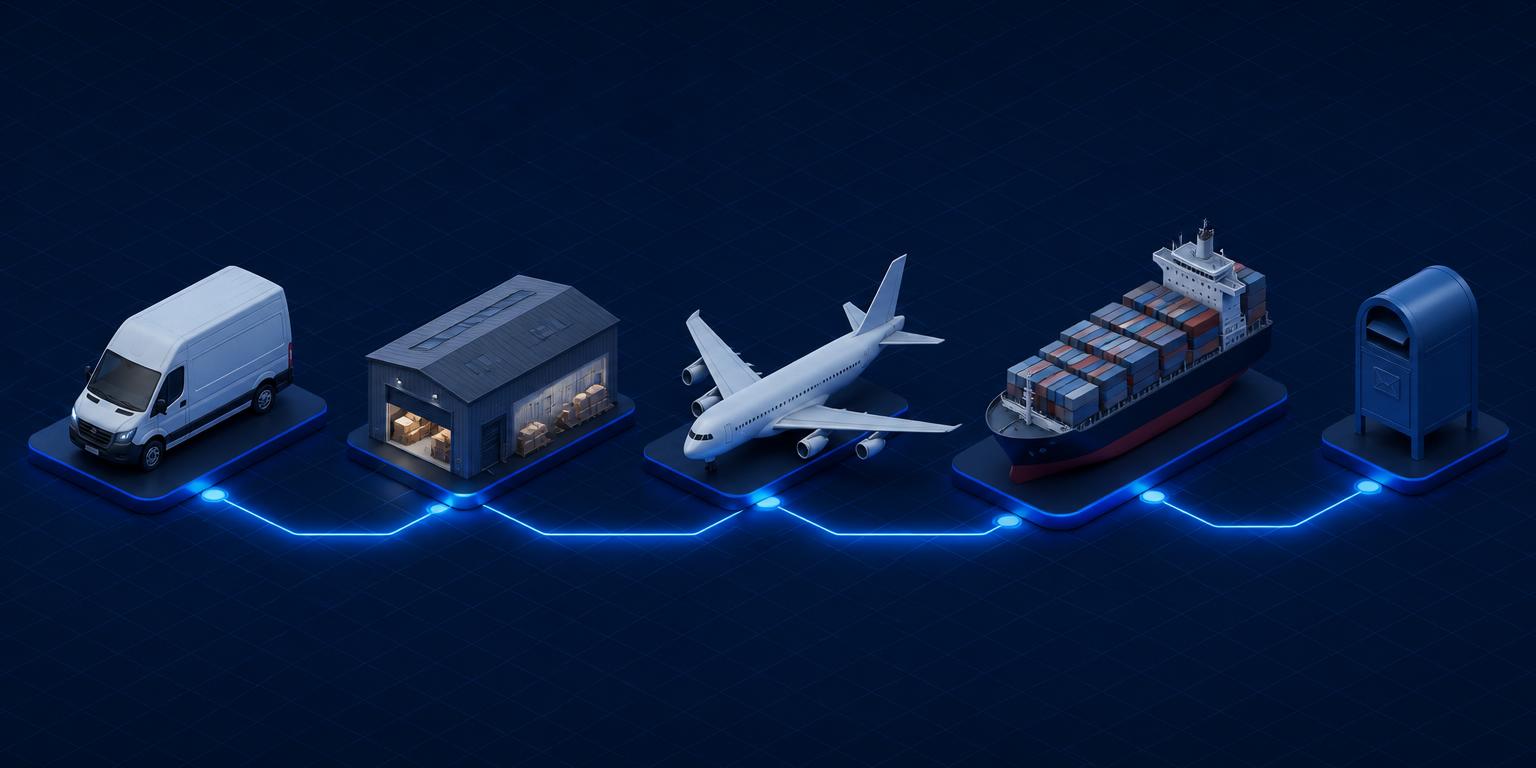
The categories, side by side
Express courier
Door-to-door air express on their own network, with their own aircraft, hubs and customs brokers. Built around speed and fixed transit days.
- Best weight range
- Small to medium — best under ~100 kg
- Speed
- Fastest: 2–5 days typical
- Cost
- Highest per kilo; gets very expensive from ~100 kg up
- Their real customer
- Individuals and companies directly
Air freight forwarder
Buys space from airlines and consolidates cargo. Handles the airport formalities, the customs file and the trucking, but flies on someone else's aircraft.
- Best weight range
- From ~50–60 kg up to several tonnes
- Speed
- Slower than express: about 5–12 days
- Cost
- Competitive once the weight is real cargo weight
- Their real customer
- Companies mostly, individuals for bigger shipments
Sea freight forwarder
Books container space, consolidates part-loads (LCL) and arranges the whole chain around the sea leg: trucking, port handling, clearance, delivery.
- Best weight range
- Pallets, part containers (LCL) and full containers (FCL)
- Speed
- Slowest: weeks, depending on the lane
- Cost
- Cheapest per kilo or per CBM at volume
- Their real customer
- Traders, importers, manufacturers
Air cargo airline
Flies the pallet or the box from one airport to another. No paperwork, no clearance, no trucking, no end customers — their clients are the forwarders and the couriers.
- Best weight range
- Pallets and unit load devices
- Speed
- The flight itself — hours
- Cost
- Wholesale airport-to-airport rates
- Their real customer
- Forwarders and couriers only
Shipping line (vessel operator)
Owns and operates the ships. Moves containers port to port on a schedule. Deals with forwarders and large shippers, not with consumers.
- Best weight range
- Containers only
- Speed
- Fixed sailing schedules — weeks
- Cost
- Wholesale port-to-port container rates
- Their real customer
- Forwarders and large shippers
Postal service
State postal operators exchanging mail and small parcels under Universal Postal Union rules. Cheap for light items, limited service level, and for some lanes the only sensible option.
- Best weight range
- Letters and small parcels, usually under 20–30 kg
- Speed
- Variable: a week to over a month
- Cost
- Cheapest for very light items
- Their real customer
- Individuals and small senders
Capability table
Capabilities only — no price comparison. Typical for each category; individual companies vary.
| Service | iShip | Express courier | Air freight forwarder | Sea freight forwarder | Air cargo airline | Shipping line (vessel operator) | Postal service |
|---|---|---|---|---|---|---|---|
| Works directly with youTakes a booking from an individual or a company, not only from other logistics companies. | Yes | Yes | Yes | Yes | No | No | Yes |
| Customs clearance & paperworkHandles the declaration, duties, HS codes and commercial documents. | Yes | Yes | Yes | Yes | No | No | Limited |
| Trucking & delivery to the doorMoves the goods on the ground at each end. | Yes | Yes | Yes | Yes | No | No | Limited |
| Airport / port to airport / port onlyTheir job ends at the terminal — someone else must take it from there. | No | No | No | No | Yes | Yes | No |
| Small parcels (under ~30 kg)One box of shoes, a phone, a laptop. | Yes | Yes | No | No | No | No | Yes |
| Heavy cargo, pallets, containersFrom ~50–100 kg up to full containers. | Limited | Limited | Yes | Yes | Yes | Yes | No |
| Sourcing & buying for youFinding the supplier, negotiating, paying the store or factory, checking the goods. | Yes | No | No | No | No | No | No |
| Selling & marketplace fulfilmentListing your goods on Amazon or eBay, storing, packing, shipping the orders. | Yes | No | No | No | No | No | No |
| Export from Lebanon / SyriaOutbound shipments with certificates of origin and commercial invoices. | Yes | Yes | Yes | Yes | No | No | Limited |
| Real tracking & real documentsAn AWB or bill of lading, a proper invoice, and a status you can follow. | Yes | Yes | Yes | Yes | Limited | Limited | Limited |
Written as a general industry explainer, last reviewed 2026-08-03. Company names are given as recognisable examples of each category, not as endorsements or as competitors we are ranking.
Where iShip sits
Between the small operators and the giants — and honest about it.
We are not the biggest, and we don't pretend to be
Next to DHL, MSC or a global forwarder we are a small company. What we sell is not tonnage — it is knowing which of these players to put your shipment on.
We pick the channel for you
Every lane has a best answer: a specific courier from one country, a specific consolidator from another, EMS from Lebanon to a US home address, a particular agent in Marseille for a container to Beirut. You would need five quotes and a lot of phone calls to find that. We already know it.
We speak the language so you don't have to
Incoterms, HS codes, chargeable weight, certificates of origin, bills of lading. Most people don't want to learn all of that to receive a box. We read the documents and explain the decision in one sentence.
None of the big players will buy the goods for you
Couriers, forwarders, airlines and shipping lines all start when the goods already exist and are already packed. Sourcing a supplier, negotiating, paying a foreign store, checking the item before it flies, selling your products abroad — that is our half of the job, and it is not in their business model at all.
There are jobs we deliberately don't take
Full container loads on lanes we don't run, certain air-cargo projects, some origin countries: we don't handle them, because doing something badly is worse than not doing it. We refer you to the right professional instead — free, and without taking a cut.
Where we do want to be the best
Online purchases and small to medium parcels, buy-for-me and sourcing, deadlines, export of personal and commercial goods from Lebanon and Syria, selling and fulfilment on marketplaces, and moving the money that goes with all of it.
Questions people actually ask
What is the difference between an express courier and a freight forwarder?
An express courier (DHL, FedEx, UPS, Aramex) owns its own network and moves small parcels door to door on a fixed published rate — fast and simple, expensive per kilo. A freight forwarder does not own planes or ships; it buys space from carriers and builds a route for heavier or more complex cargo, handling documents, customs and consolidation. Couriers win on speed and small weights; forwarders win from roughly 50 kg upwards.
Can I book directly with an airline or a shipping line?
Technically yes, but their service ends airport to airport or port to port. Pickup, export clearance, documents, import clearance and final delivery are not included, and their rates are built for freight professionals who already hold accounts and volume. Most individuals and small businesses end up paying more this way than through a forwarder.
Which channel is cheapest for a 20 kg parcel from the USA?
At that weight a consolidated forwarder lane is almost always cheaper per kilo than a pure express courier, while still giving you tracking and customs handling. Below about 2 kg express or post can be competitive. The honest answer depends on origin, dimensions and deadline — which is exactly what our calculator prices in seconds.
Do couriers and forwarders buy products for you?
No. Every category on this page starts working once the goods exist and are packed. Paying a foreign store with a foreign card, negotiating with a supplier, inspecting an item before it flies, or selling your goods on a marketplace abroad is not part of their business model — it is part of ours.
Is the post office a real option?
For very light, low-value, non-urgent items it can be the cheapest route on paper. What you give up is transit reliability, usable tracking and anyone to call when a parcel stops moving. For anything with a deadline or real value, it is a false economy.