
Real door-to-door vs the door-to-door sold locally
In Lebanon, Syria and Iraq, "door to door" usually means a flat all-in price per kilo or per CBM from China, Turkey or the UAE. In the shipping industry it means something quite specific — and the two are not the same product. Both have a place; you just need to know which one you bought.
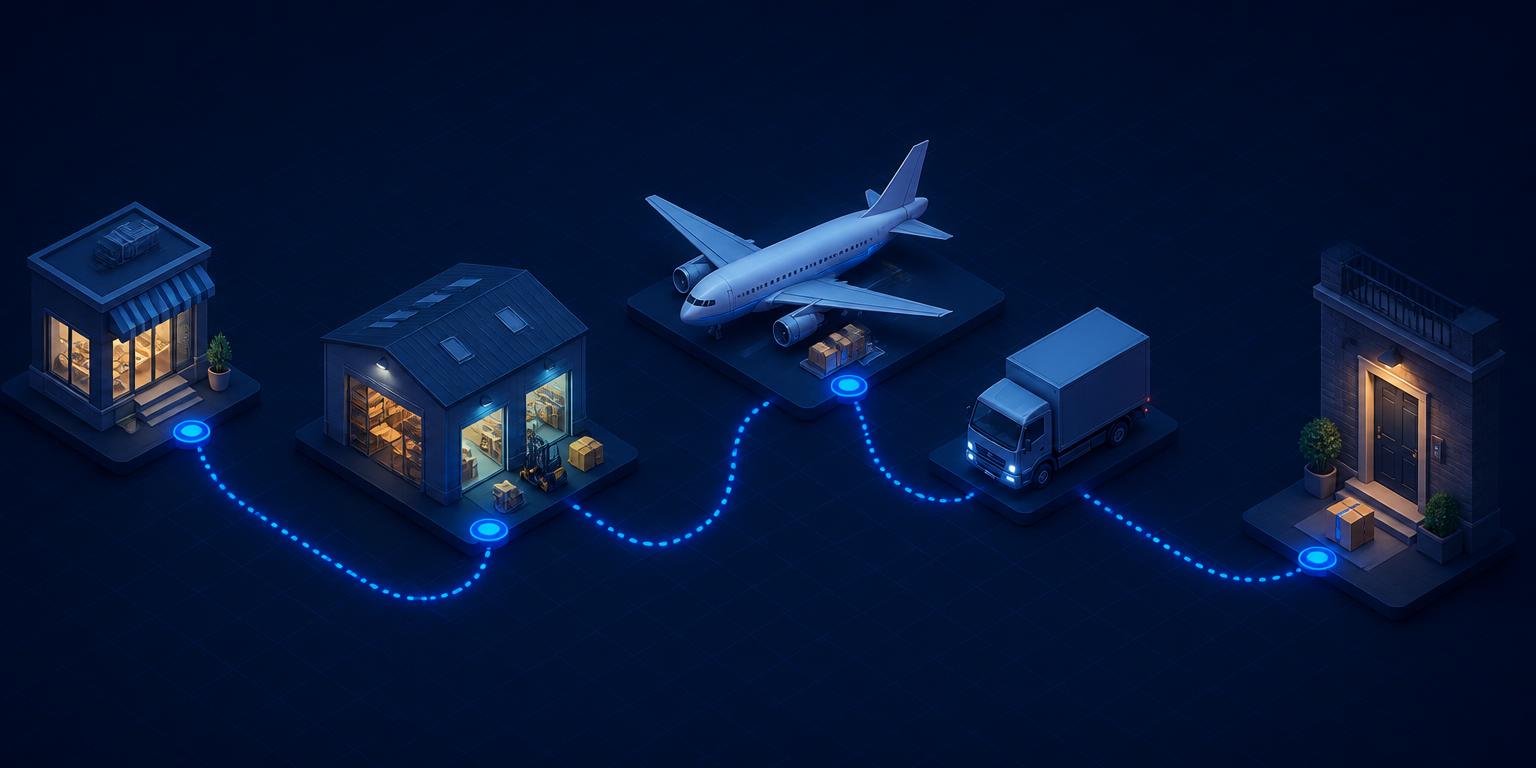
What door-to-door means in the industry
- One company is accountable for the whole chain: pickup, export clearance, the air or sea leg, import clearance, duties and final delivery.
- Real transport documents: an air waybill or a bill of lading in your name, with the carrier and the flight or vessel written on it.
- A declared value per commodity, so duty is calculated on what the goods actually are.
- Tracking from pickup to delivery, and a person you can ask for a status.
- A proper invoice for the freight, so a company can book the cost and claim it.
- Insurance available on the declared value, with a claim process if something is damaged or lost.
What the local version genuinely gets right
- One all-in price per kilo (air) or per CBM (container) — nothing else to calculate.
- No paperwork for the buyer, no customs file to understand, no logistics vocabulary.
- Usually cheap, and genuinely simple.
- Well established on the China, Turkey and UAE lanes, where volumes are huge.
What it leaves out
- One price for every commodity: a kilo of laptops costs the same as a kilo of shoes. A $1,000 laptop and $100 of shoes are not the same risk, the same duty or the same handling — and paying the same for both means someone is absorbing a mismatch.
- No tracking system. You don't know which carrier, which flight, which vessel, or where the goods are today.
- No air waybill or bill of lading, and often no proper invoice — so there is no document proving what moved, when, or who is responsible.
- Follow-up and customer service are usually informal at best.
- Insurance is frequently absent. If the shipment is lost, what you can claim is whatever the shipper agrees to.
- It is not what the industry calls door-to-door. The name borrows the credibility of a service with documents, and drops the documents.
Who it fits
- • Consumers who just want the box and don't need any paperwork.
- • Small traders who don't declare the goods and don't need an invoice.
- • Low-value, low-risk items where losing the shipment is survivable.
Who it does not fit
- • Registered companies that need a freight invoice and a declared cost.
- • Anything valuable, fragile, branded, regulated or under warranty.
- • Goods that will be resold and need origin and customs paperwork.
- • Anyone who needs to know where the shipment is, today, with a number.
How iShip does it
We quote per commodity, not one price for everything. You get the transport document, the declared value, a tracking status, a proper invoice, and insurance if you want it. It is not always the cheapest number on the table — it is the number you can account for, follow, and claim against. And when a flat-rate container really is the right answer for what you're moving, we'll tell you that too.
This is a general explanation of two different service models, last reviewed 2026-08-03. It is not a statement about any specific company, and practices vary between providers — always ask what documents and tracking you will receive before you book.
Common questions
What does door-to-door mean in shipping?
It means one company is accountable for the entire chain — pickup at origin, export clearance, the air or sea leg, import clearance and duties, and final delivery to the receiver's address — with a real air waybill or bill of lading, a declared value, tracking and a proper freight invoice.
Why is the local "door to door" service so cheap?
Because it is sold as a flat price per kilo or per CBM across all commodities, usually without individual declarations, transport documents, tracking or insurance. You are buying simplicity and price, not documentation or accountability.
Is the local door-to-door service illegal?
We make no legal claim about any company. What we can say is that the service typically comes without an air waybill, a bill of lading, a commodity-specific declaration, or a freight invoice — which makes it unsuitable for registered businesses that need to account for the cost and the goods.
Can I get insurance on a flat-rate per-kilo shipment?
Usually not in a meaningful way. Insurance is priced on a declared value, and flat-rate per-kilo services generally do not declare the value of each shipment. If the cargo matters to you, ask for a declared value and a written insurance option before booking.
Which one should I choose for my shipment?
If the goods are personal, low value and you mainly care about the cheapest all-in number, the flat-rate model is often fine. If you are a registered business, need customs paperwork or origin documents, want real tracking, or the cargo value is high, choose the documented route.